
Honoris Causa Award — Definition, Eligibility & Benefits
Home/Department of Honorary Awards/Honoris Causa Award
Department of Honorary Awards • Chicago Open University
The Honoris Causa Award, also known as an honorary doctorate, is a prestigious recognition conferred by The Chicago Open University. It celebrates individuals who have made exceptional contributions to their professional field or to society at large. This symbolic distinction honors excellence, leadership, and social impact, regardless of whether the recipient has followed a traditional academic path. Receiving an honoris causa certificate is a tribute to the individual's influence, integrity, and lifelong dedication to progress and positive change.
What Is Honoris Causa?
The term honoris causa (Latin for "for the sake of honor") refers to an award granted to acknowledge extraordinary achievement. Unlike earned degrees, an honoris causa award recognizes merit, leadership, and service to society rather than completion of coursework or examinations.
Honoris Causa Award Eligibility
Candidates for the honoris causa nomination are evaluated on their exceptional achievements and alignment. To meet the honoris causa award eligibility requirements, applicants should demonstrate:
Exceptional Accomplishments
Proven excellence not necessary in academics but in any domain such as science, education, business, the arts, public service, social innovation, or humanitarian work.
Positive Societal Impact
Tangible and lasting contributions that improve communities, industries, or sectors on a local, national, or global scale.
Reputation & Respect
Recognition from peers, institutions, or leaders, reflecting professional success and ethical character.
Shared Values
Commitment to innovation, integrity, and the advancement of knowledge and social good in line with the values of The Chicago Open University.
Honoris Causa Awardees
View All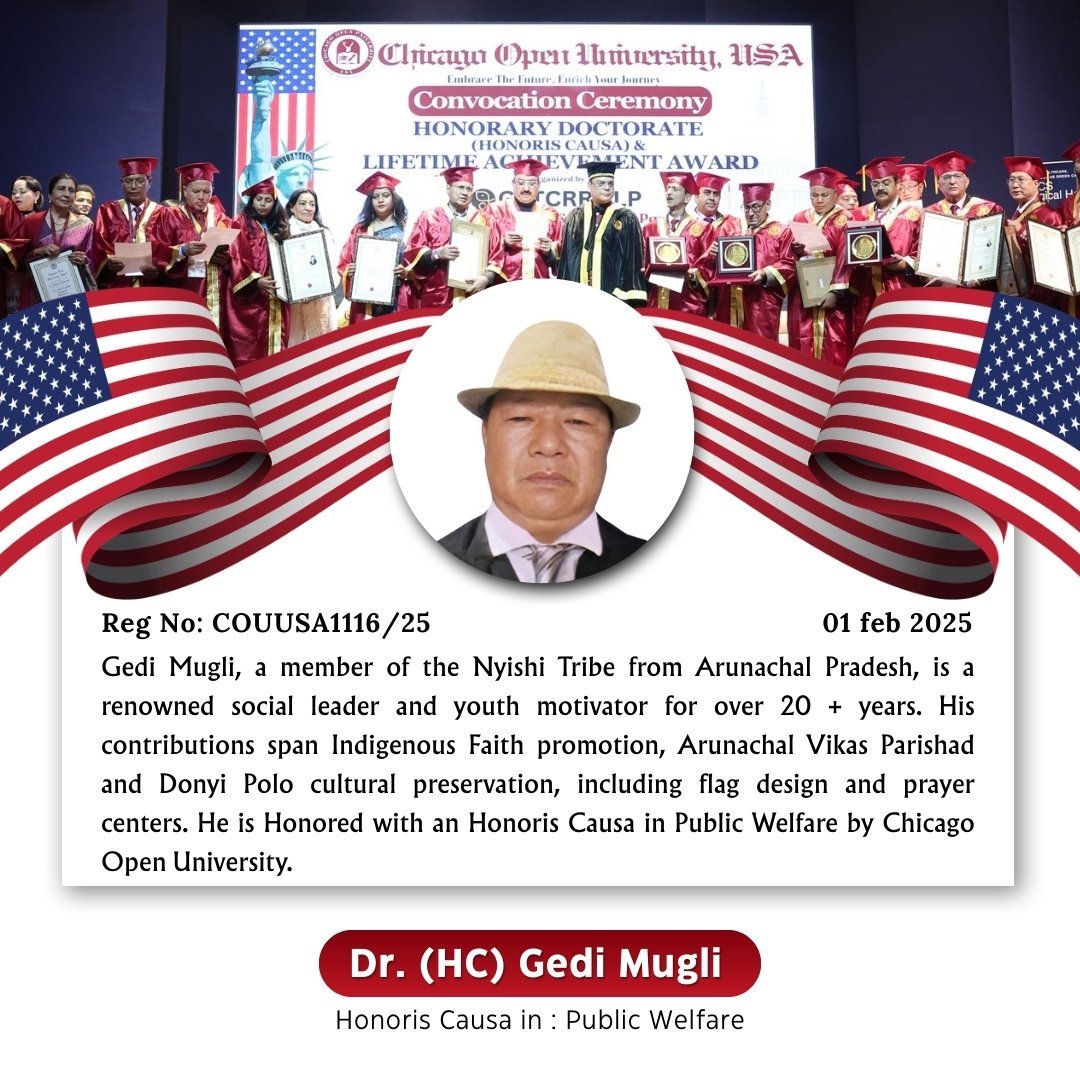 Dr. (HC) Gedi Mugli
Honoris Causa in Public Welfare
Convocation Ceremony — 1 February 2025
View profile
Dr. (HC) Gedi Mugli
Honoris Causa in Public Welfare
Convocation Ceremony — 1 February 2025
View profile
 Dr. (HC) Nitisha Yadav
Honoris Causa in Education
Convocation Ceremony — 1 February 2025
View profile
Dr. (HC) Nitisha Yadav
Honoris Causa in Education
Convocation Ceremony — 1 February 2025
View profile
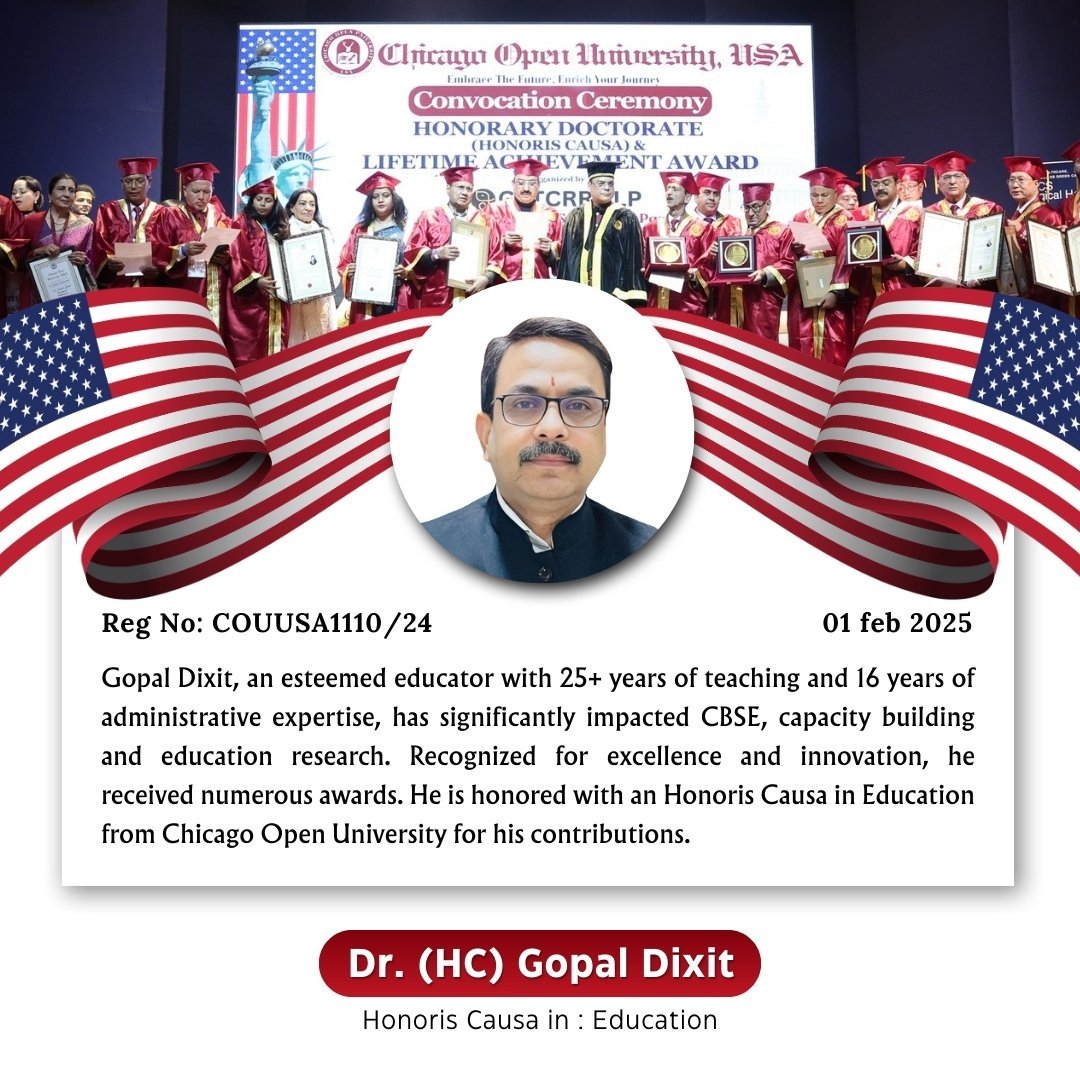 Dr. (HC) Gopal Dixit
Honoris Causa in Education
Convocation Ceremony — 1 February 2025
View profile
Dr. (HC) Gopal Dixit
Honoris Causa in Education
Convocation Ceremony — 1 February 2025
View profile
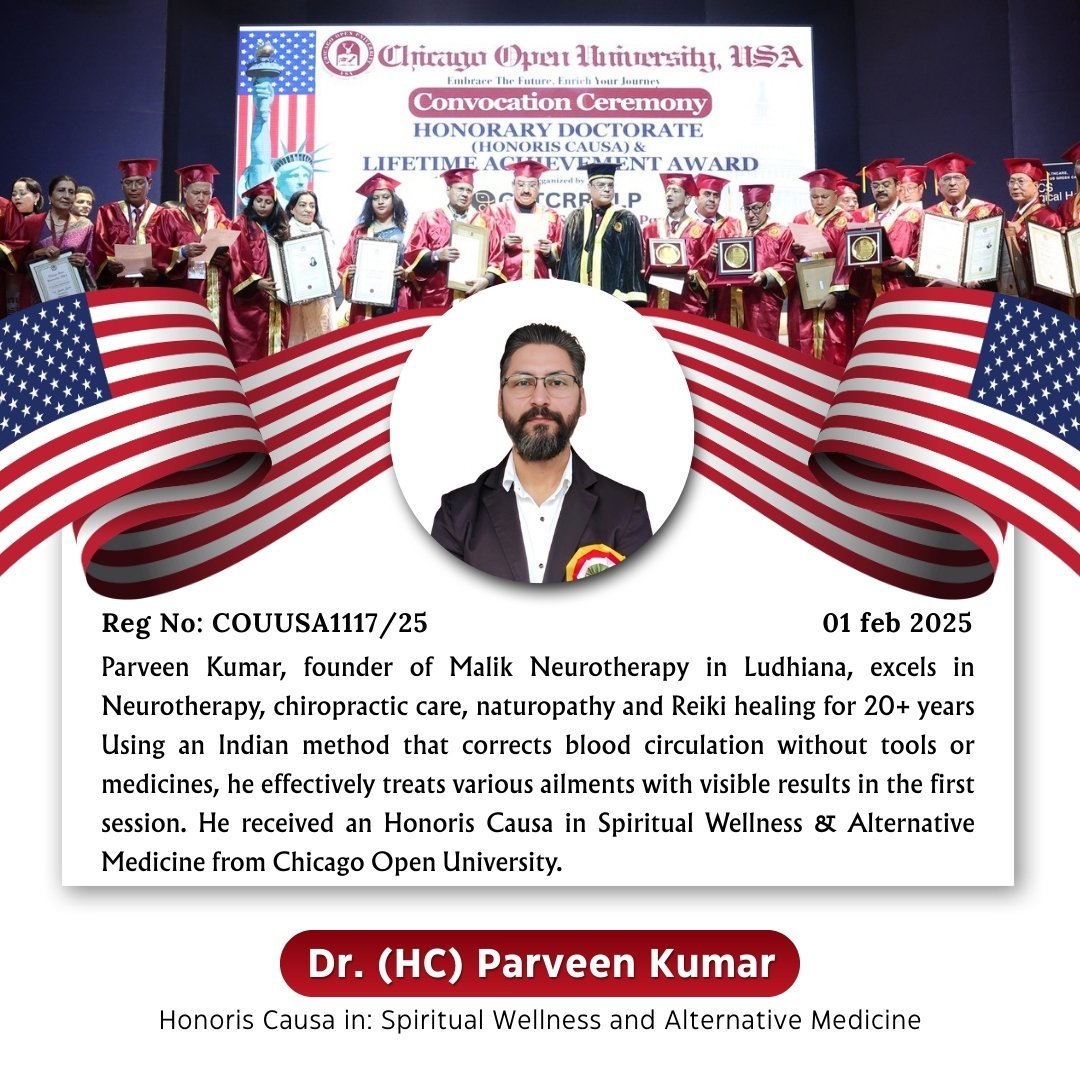 Dr. (HC) Parveen Kumar
Honoris Causa in Spiritual Wellness and Alternative Medicine
Convocation Ceremony — 1 February 2025
View profile
Dr. (HC) Parveen Kumar
Honoris Causa in Spiritual Wellness and Alternative Medicine
Convocation Ceremony — 1 February 2025
View profile
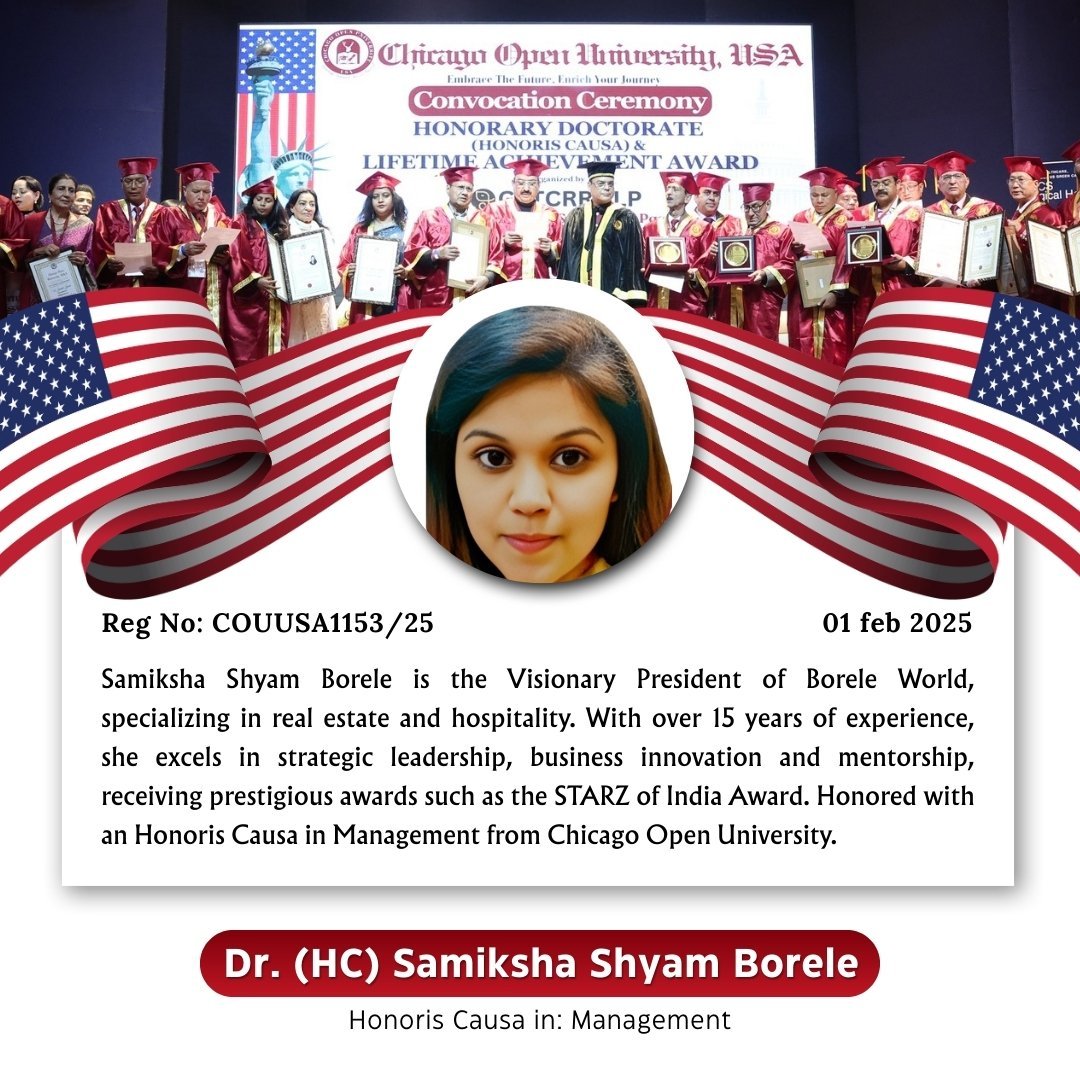 Dr. (HC) Samiksha Shyam Borele
Honoris Causa in Management
Convocation Ceremony — 1 February 2025
View profile
Dr. (HC) Samiksha Shyam Borele
Honoris Causa in Management
Convocation Ceremony — 1 February 2025
View profile
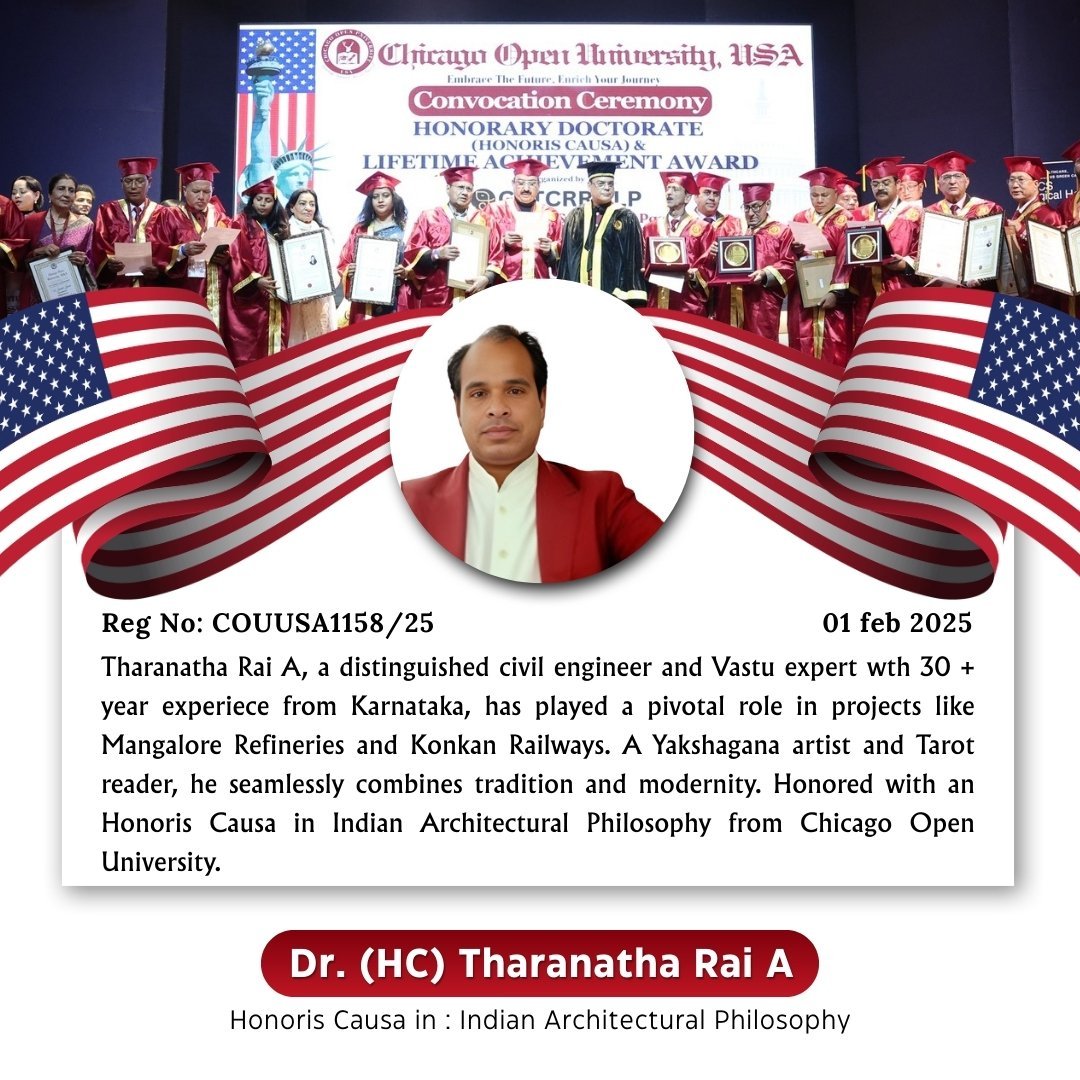 Dr. (HC) Tharanatha Rai A
Honoris Causa in Indian Architectural Philosophy
Convocation Ceremony — 1 February 2025
View profile
Dr. (HC) Tharanatha Rai A
Honoris Causa in Indian Architectural Philosophy
Convocation Ceremony — 1 February 2025
View profile
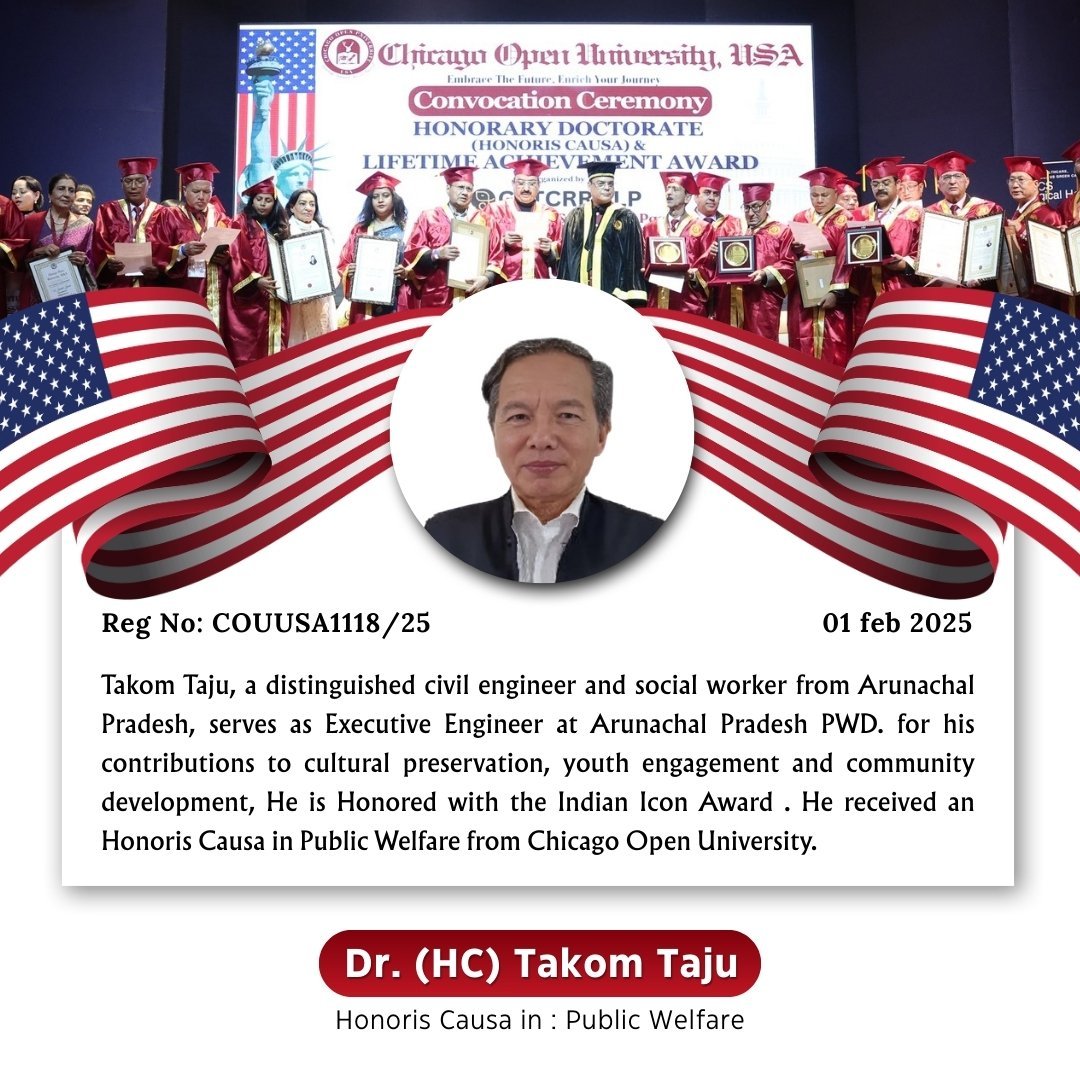 Dr. (HC) Takom Taju
Honoris Causa in Public Welfare
Convocation Ceremony — 1 February 2025
View profile
Dr. (HC) Takom Taju
Honoris Causa in Public Welfare
Convocation Ceremony — 1 February 2025
View profile
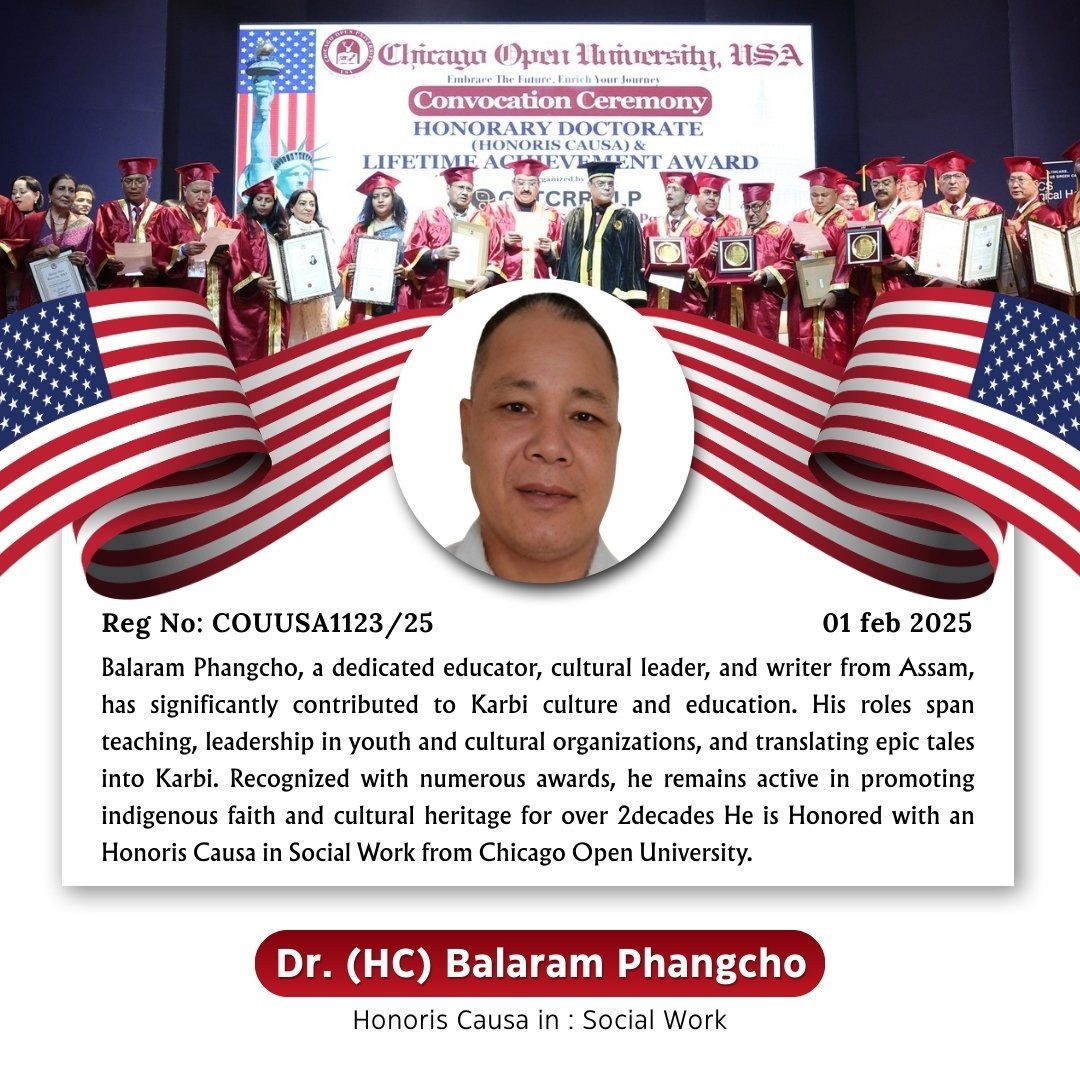 Dr. (HC) Balaram Phangcho
Honoris Causa in Social Work
Convocation Ceremony — 1 February 2025
View profile
Dr. (HC) Balaram Phangcho
Honoris Causa in Social Work
Convocation Ceremony — 1 February 2025
View profile
How to Present a Strong Honoris Causa Nomination
To secure consideration for the honoris causa award, applicants or nominators should prepare a clear and compelling case:
Comprehensive Portfolio
Include a detailed CV, notable achievements, awards, leadership roles, and evidence of community or industry contributions.
Formal Letter of Intent
Address the Honoris Causa Award Committee, express gratitude to the university, and explain how your accomplishments reflect the spirit of the award.
Endorsements & Recommendations
Obtain references from respected professionals or community figures who can attest to your credibility and impact.
Connection with the University
Highlight past collaborations or contributions that demonstrate support for the institution's mission.
Tone of Humility
Present achievements with sincerity and respect, emphasizing service over entitlement.
Follow Application Guidelines
Submit documents in line with the university's rules and deadlines.
Important: The conferral of the honoris causa award is at the sole discretion of the university's governing body. A limited number of awards are granted annually, underscoring its exclusivity.
Benefits of the Honoris Causa Award
Receiving an honorary doctorate from The Chicago Open University offers multiple professional and personal advantages:
Recognition & Distinction
Official acknowledgment of your achievements by a globally respected institution.
Enhanced Reputation
Boosts your profile, often leading to invitations for keynote speeches, panels, and advisory roles.
Expanded Network
Provides access to influential professional, and alumni communities.
Professional Validation
Adds prestige and credibility to your career or personal brand.
Advocacy Platform
Strengthens your ability to champion causes, reforms, or innovations.
Motivational Legacy
Inspires peers and younger generations to strive for excellence and service.
Purpose & Relevance of the Honoris Causa Award
The honoris causa award serves several purposes:
Recognition of Excellence
Honors individuals who drive progress through exceptional work or service.
Symbolic Partnership
Creates a meaningful link between the university and the recipient, reflecting shared goals and ideals.
Educational Inspiration
Demonstrates the value of courage, dedication, and creativity to students and professionals alike.
Legacy & Tribute
Offers posthumous recognition as a mark of respect for a life dedicated to impact and innovation.
Empowerment for Change
Equips recipients with greater visibility to support meaningful initiatives.
General Disclaimer – Department of Honorary Awards
All awards, honours, honorary titles, distinctions, and recognitions conferred or administered by the Department of Honorary Awards of Chicago Open University (COU) are intended solely to acknowledge professional accomplishments, leadership, service, contributions to society, or other meritorious achievements, as applicable. Unless expressly stated otherwise and independently established under applicable law, such recognitions are honorary and non-academic in nature.
Such awards and recognitions do not constitute earned academic degrees, diplomas, academic credits, professional qualifications, licences, certifications of competency, or statutory credentials. They must not be represented or construed as equivalent to any recognised academic qualification or as independently establishing eligibility for admission, academic credit, recruitment, appointment, promotion, licensing, registration, or employment in academic, governmental, regulated, or other professional positions where specific qualifications or approvals are required.
Recipients are advised to list these recognitions under “Awards & Accolades,” “Honours,” or a similarly appropriate section of their CVs, résumés, biographies, portfolios, and professional profiles, and not under “Educational Qualifications,” “Academic Degrees,” or equivalent headings.
The conferment or receipt of any such recognition does not, by itself, establish that COU or the relevant award is recognised, accredited, approved, or endorsed by any government, statutory body, accreditation agency, professional regulator, university, or other competent authority. Any claim of such recognition or approval must be independently verified with the relevant authority.
Recipients are responsible for describing and using their awards and titles accurately and in accordance with applicable laws, regulatory requirements, recruitment criteria, and the policies of relevant institutions or employers. No recipient should use an honorary designation in a manner that misrepresents their academic credentials, professional status, or legal entitlement to practise a regulated profession.
This disclaimer applies generally to awards and recognitions administered by the Department of Honorary Awards, subject to the specific terms of each award and applicable law.
Apply for the Honoris Causa Award
Complete the application form with your details, qualifications, documents and references. The award committee reviews every nomination.